I first heard about the Great Glen Paddle Challenge in 2018, in my early months of stand up paddleboarding. At that point I felt “quite good” if I could paddle one or two kilometres without stopping. Then I discovered people were paddling 92 kilometres across Scotland—in one day, or over two—and I got a very immediate reality check.
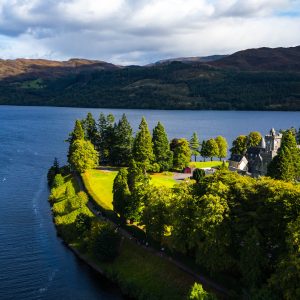
What makes the Great Glen different isn’t just the distance. It’s the character of the route. It’s the way man-made engineering and raw geology collide: the Caledonian Canal cutting through ancient landscape, stitching lochs together like beads on a thread. One moment you’re gliding along still canal water; the next you’re out on a loch where wind turns “flat” into “sea-like” in minutes. The course has a magic that’s hard to explain properly until you’ve been there. It can move you from admiration to awe, enjoyment to fear, and (yes) happiness to hate—sometimes in the same hour.
I read the organiser’s briefing sheets repeatedly and tried to visualise the route. It helped, but there’s one thing a map doesn’t communicate: scale. Loch Ness in particular isn’t just “a loch on the route.” It has a presence that merits its mythology. You can’t really picture what 35 kilometres of exposed water does to your brain until you are there facing it.
SUP racing is always a faff. The Great Glen turns the faff dial up. The route is wind-dependent: it could run Fort William → Inverness or the reverse, and over two days the direction can even change after Day 1. That unpredictability is part of the charm—provided you don’t pretend it’s a simple A-to-B outing.
A lot of paddlers base themselves at Fort Augustus, because it sits roughly halfway and makes the travel workable whichever way the route goes. But that also means early starts. When you’re leaving accommodation at 5:30am, you realise quickly this isn’t a casual Sunday paddle dressed up as a race.
And yet… that’s part of the appeal. The event feels like a small expedition with a community attached to it. You’re doing something properly Scottish: big landscape, variable conditions, and a steady sense that nature is in charge.
 Why it’s worth it
There are races you finish and forget. Great Glen Paddle Challenge isn’t one of them.
It stays with you because it’s not only a test of fitness. It’s a test of decision making: pace, rhythm, hydration, kit, transitions, and the ability to reset your head when the water stops behaving. The Great Glen doesn’t require you to be superhuman—but it does reward paddlers who respect the basics and don’t let emotion drive the early kilometres.
If you’re tempted to enter, my advice is simple: don’t ask “am I fast enough?” Ask “can I stay efficient for a long time, and can I handle a loch when it gets moody?”
That’s why, in my book Improving Your Stand Up Paddleboarding, the ‘unglamorous’ chapters matter most for this event—efficiency (so you can keep going), and upwind/downwind skills (because you will get one, the other, or both). Great Glen is where technique stops being theory and becomes survival.
Enter the Great Glen Paddle Challenge in 2026 and get a copy of Andy Burrow’s book for only £10 (instead of £16.99) – a special discount code will be emailed out to you giving you access to buy Andy’s book for only £10 from our parent company Sailingfast Ltd.